

Gastroesophageal Reflux and Hiatal Hernia Surgery in Geneva

Gastroesophageal reflux disease and hiatal hernia frequently coexist. Each requires assessment of its own mechanism, symptoms and functional impact. At Geneva Surgery, treatment combines objective diagnosis, individualized decision-making and robotic minimally invasive reconstruction when surgery is appropriate.

Gastroesophageal Reflux Disease

Medical treatment and the reflux mechanism

Treatment generally begins with dietary and lifestyle adjustments combined with proton pump inhibitors, or PPIs. Some patients require daily medication for many years, sometimes lifelong.
PPIs reduce the acidity of stomach contents. They do not correct failure of the anti-reflux barrier: reflux becomes less acidic, while the physical movement of gastric contents into the esophagus can continue.
Regurgitation may therefore persist despite effective control of heartburn. Nighttime cough, voice changes, throat irritation or asthma-like symptoms may also warrant investigation. Their relationship to reflux is documented through appropriate assessment, alongside other possible causes.

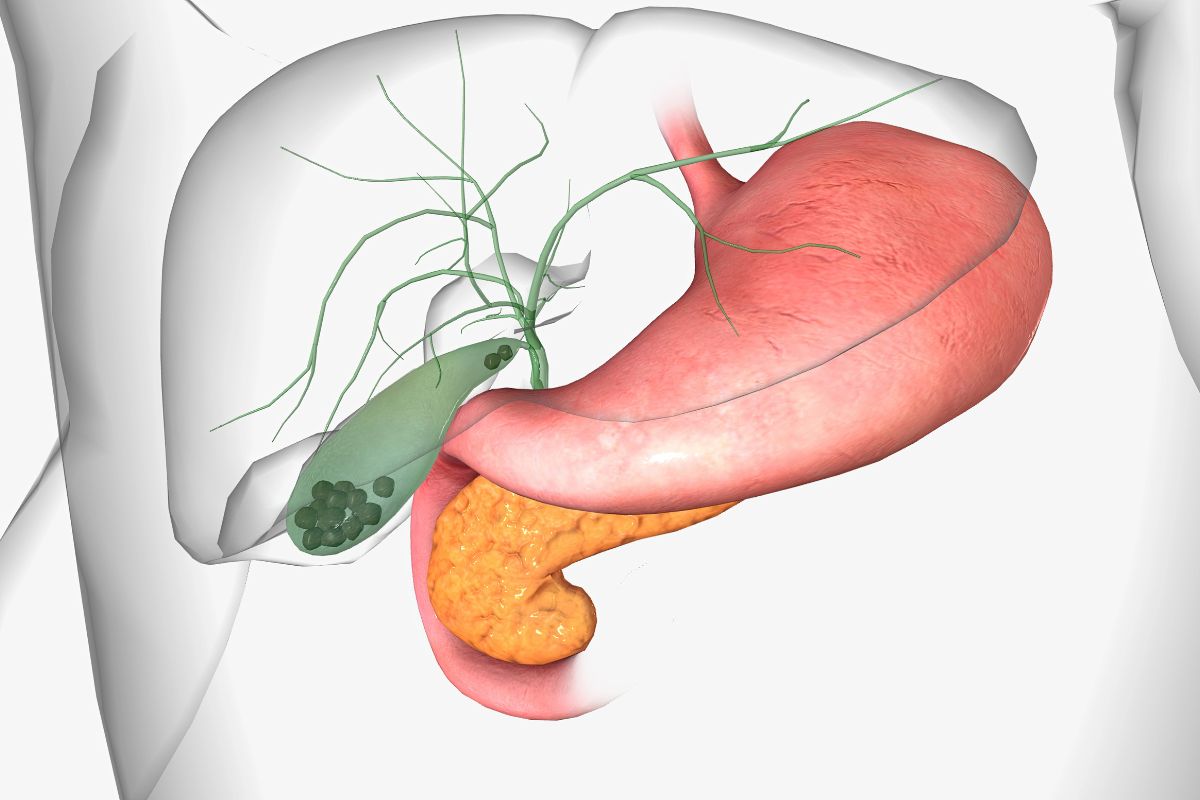
Gallstones are pieces of solid material that form in the gallbladder, a small hollow organ located beneath the liver. 3d rendering

Long-term PPIs and potential adverse effects

Long-term treatment deserves a clear discussion of its benefits, potential adverse effects and alternatives. Continued use should rest on a defined indication, an appropriate dose and periodic review.
Potential adverse effects and reported associations include:

  • Vitamin and mineral disturbances : low magnesium and vitamin B12 deficiency can occur; observational studies also associate prolonged acid suppression with iron deficiency.
  • Digestive infections : reduced gastric acidity weakens a natural defense against ingested pathogens. An association with Clostridioides difficile infection has been reported, particularly in hospitalized patients, although findings differ between study types.
  • Bone fractures : an association has been reported with prolonged or high-dose treatment, with particular relevance to patients who already have osteoporosis or fracture risk.
  • Kidney inflammation : acute interstitial nephritis is a rare recognized adverse reaction that can occur at any stage of treatment.


Other reported associations, including small intestinal bacterial overgrowth and chronic kidney disease, remain under investigation. The strength of evidence varies, and an association alone does not establish causation. Any medication change is planned with the treating clinician.

Illustration of internal organs is on the man body against the gray background. peopel touching stomach painful suffering from enteritis. internal organs of the human body.

Discussing a surgical alternative

Patients requiring continuing medication should have the opportunity to understand both medical treatment and reconstructive surgery. A surgical assessment can be appropriate while medication still controls heartburn.

Persistent regurgitation, objectively documented reflux-related symptoms, medication intolerance, reflux complications or a preference to explore an alternative to lifelong treatment can support this discussion.

Anti-reflux surgery aims to restore an effective mechanical barrier. In appropriately selected patients, it can provide lasting reflux control and reduce or eliminate the need for reflux medication. The decision also considers operative risks, swallowing difficulties, bloating and the possibility of recurrence or future medication use.

Hiatal Hernia

Anatomical displacement and functional impact

A hiatal hernia develops when part of the stomach moves through the diaphragm into the chest. It frequently accompanies reflux, which may dominate the clinical presentation. The hernia can also produce symptoms through its own anatomical and mechanical effects.
Larger hernias may cause early fullness, reduced meal capacity, swallowing difficulty, pressure after meals or chest discomfort. Some patients develop iron-deficiency anemia related to mucosal injury within the hernia.
When a substantial part of the stomach occupies the chest, its volume can affect surrounding structures and contribute to breathlessness, reduced exercise tolerance or cardiac compression. In the largest hernias, additional abdominal organs, including part of the colon, may also migrate through the diaphragmatic opening.

Gallstones are pieces of solid material that form in the gallbladder, a small hollow organ located beneath the liver. 3d rendering

Recognizing the right time for repair

A large, symptomatic hiatal hernia warrants surgical assessment while the patient retains good physiological reserve and a favorable operative risk profile.

This may represent a favorable window for elective repair: the hernia already has a meaningful impact on daily life, while the patient’s general health supports planned reconstruction and recovery.

With time, the hernia may enlarge and symptoms may become more limiting. Increasing frailty, additional medical conditions and a more complex medication regimen can also increase the burden of treatment. An operation considered later may therefore involve a larger anatomical problem in a patient with reduced capacity to tolerate surgery.

At Geneva Surgery, assessment considers this evolving balance. The aim is to identify the appropriate time for repair through an individualized evaluation of symptoms, anatomy, functional reserve, operative risk and patient preferences.

Frequently Asked Questions

Reflux and hiatal hernia

Yes. PPIs reduce acidity, while gastric contents can continue to reflux. Persistent symptoms may require further assessment.

Yes. Large hernias can affect surrounding thoracic structures. Assessment clarifies the hernia’s contribution alongside other cardiopulmonary conditions.

Yes. An assessment can compare continued medical treatment with reconstructive surgery according to your diagnosis, health and priorities.

Symptoms, anatomy, progression and physiological reserve are considered together to identify a favorable balance between surveillance and elective repair.

Clinical and Functional Assessment

Investigations identify the cause of symptoms and guide treatment. Endoscopy assesses the esophageal lining and junction with the stomach. Reflux monitoring documents acid exposure and, with impedance testing, detects weakly acidic and non-acid reflux. Manometry evaluates swallowing coordination. Contrast imaging, sometimes complemented by CT, defines larger or complex hernias.

Graduated compression bandage applied to the legs to support circulation and reduce the risk of thrombosis after abdominal surgery.

Individualized Robotic Reconstruction

At Geneva Surgery, surgery uses a robotic minimally invasive approach. Repair repositions the herniated organs, reconstructs the diaphragmatic hiatus and restores the anti-reflux barrier when indicated. The reconstruction and any reinforcement are adapted to anatomy, tissue quality and esophageal function.
Stable three-dimensional vision and articulated instruments support precise dissection and suturing in this deep anatomical region, particularly in large hernias, recurrent repairs and anatomy altered by previous surgery. The objectives are a stable reconstruction, comfortable swallowing and preservation of digestive function.

Preparation and Recovery

Care is integrated into the Geneva Surgery Optimized Surgical Recovery pathway. Preparation is scaled to the procedure, medical condition and functional reserve. Coordinated surgical and anesthesia care, opioid-sparing pain management, early mobilization and individualized nutritional guidance support recovery.
Food texture and meal size progress according to swallowing comfort and the team’s instructions. Follow-up assesses symptoms, eating comfort and return to daily activities.