
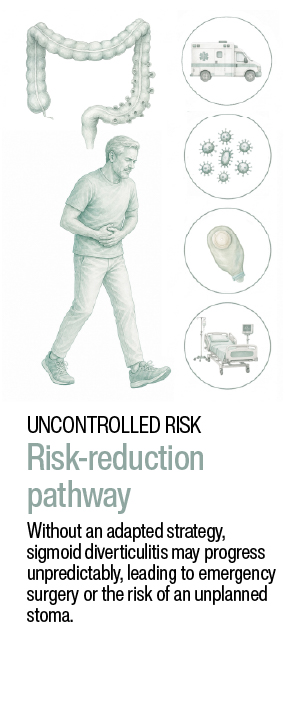
Surgical treatment is considered in selected situations, such as recurrent symptomatic episodes affecting quality of life, the occurrence of complications including abscess, fistula or stenosis, or disease patterns associated with increased individual risk. Each situation is evaluated individually, integrating disease history, symptom burden, anatomical findings and the overall patient profile.
Decisions are made within a shared decision-making framework, based on clear, objective information and realistic expectations. The objective is to offer a treatment strategy that is effective, proportionate and tailored to each individual situation.
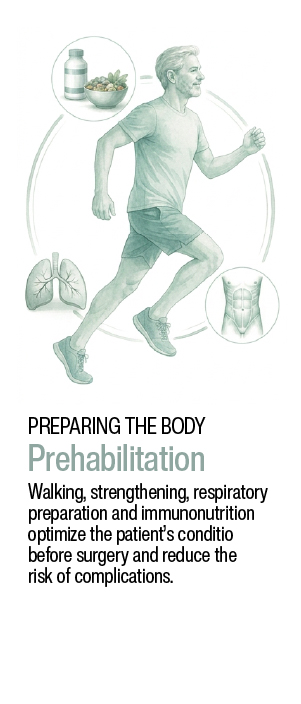
When surgery is indicated, preparation plays a central role in the quality of the outcome. Patients are integrated into a structured prehabilitation programme aimed at optimising physical condition, nutritional status and medical balance before surgery. This preparation allows patients to approach the operation in the best possible condition and contributes to smoother postoperative recovery.
Preparation also includes clear and transparent information, allowing patients to understand each step of the surgical pathway and to become active participants in their care. By anticipating and optimising all modifiable factors before surgery, the objective is to create the best possible conditions for a safe procedure and a predictable recovery.
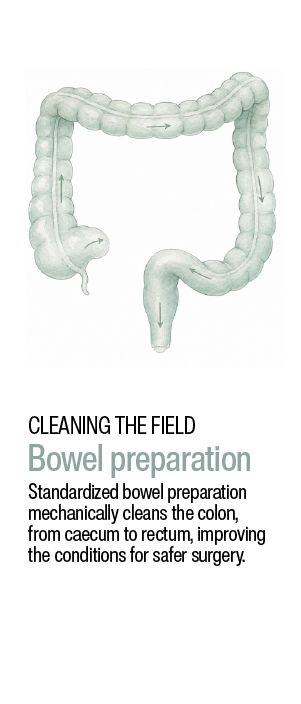
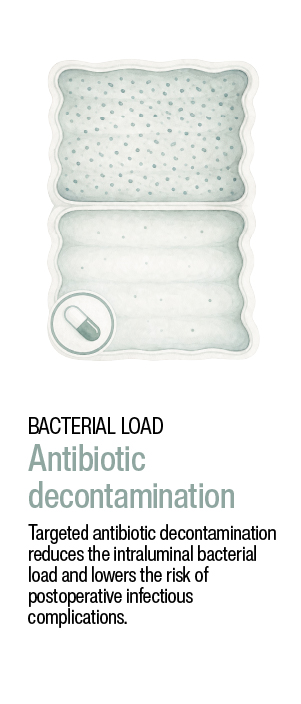
Systematic bowel preparation is a standard component of care. All colonic procedures are performed following a combined mechanical and antibiotic bowel preparation protocol, in accordance with established international recommendations. This evidence-based approach has demonstrated a reduction in infectious complications and supports safe and controlled surgical execution.
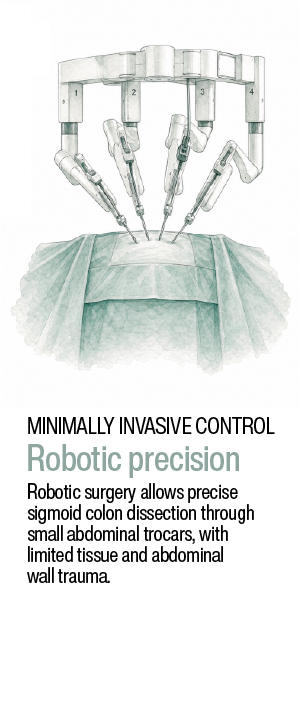
At Geneva Surgery, colorectal resections for diverticular disease are performed using a minimally invasive strategy in which robotic surgery represents the primary operative modality. This approach allows precise dissection within inflamed or fibrotic tissue planes, accurate vascular control and meticulous reconstruction, particularly in anatomically constrained regions such as the pelvis. This level of precision contributes to consistent execution and predictable recovery.
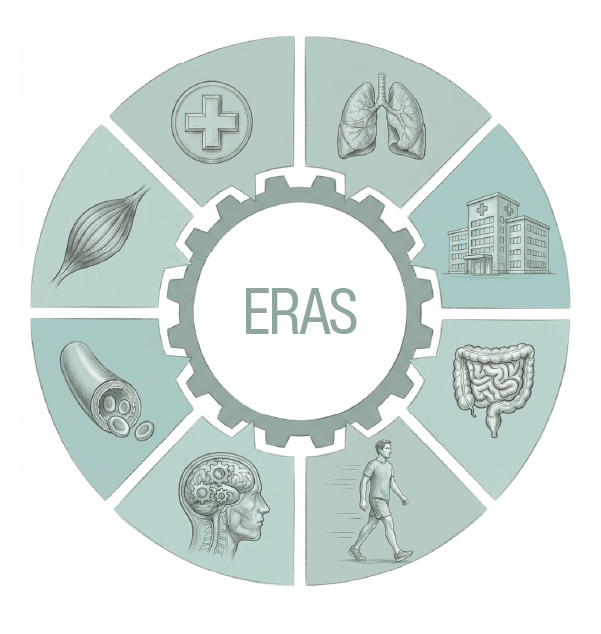
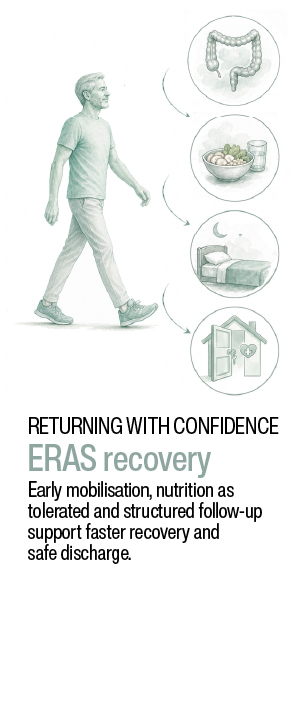
Perioperative care is fully integrated into a comprehensive treatment pathway, with recovery guided by ERAS principles. It includes rigorous preoperative optimisation, an analgesic strategy avoiding the routine use of opioids, early mobilisation and coordinated postoperative follow-up.
When diverticular disease presents in a complicated form or progresses to an acute condition, emergency surgical care is delivered according to the same standards of precision, safety and organisation as elective surgery. Robotic surgery is structurally integrated into emergency practice, enabling consistent and controlled management, including in complex inflammatory settings.
Patients remain in hospital until clearly defined recovery criteria have been met. These include effective pain control without routine opioids, satisfactory functional independence, adequate resumption of oral intake and favourable gastrointestinal recovery. This structured approach supports a safe transition home or continuation of the therapeutic pathway whenever required.
Surgery may be considered after complicated episodes, recurrent attacks, a stricture, fistula, abscess, or persistent symptoms affecting quality of life. The aim of elective surgery is to operate under more favourable conditions, outside an emergency setting.
Elective surgery allows time to prepare the patient, optimise risk factors, plan the procedure and reduce perioperative vulnerability. Emergency surgery is often performed in a less favourable inflammatory, infectious or general clinical context.
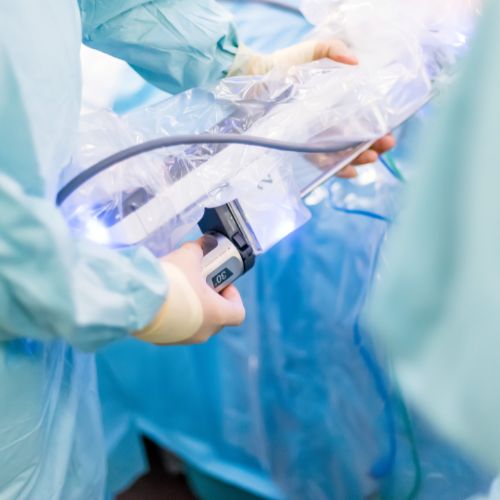
A robotic sigmoidectomy involves removing the diseased sigmoid segment of the colon using robotic surgery. It enables precise dissection and appropriate digestive reconstruction within a structured perioperative pathway.
Preparation may include nutritional optimisation, tailored physical activity, an anaesthetic assessment, bowel preparation, an antibiotic strategy and an ERAS pathway designed to support recovery.
Selected diverticular disease procedures are presented through surgical educational video material available on the Geneva Surgery YouTube channel.
These videos are intended for professional and academic education and complement clinical information, without replacing individual consultation or personalised clinical assessment.
Visit the Geneva Surgery YouTube channel for surgically oriented educational content related to colorectal and diverticular disease management.
To provide the best experience, we use technologies such as cookies to store and/or access device information. Consenting to these technologies will allow us to process data such as browsing behavior or unique identifiers on this site. Not consenting or withdrawing consent may negatively affect certain features and functions.