
Optimized Surgical Recovery

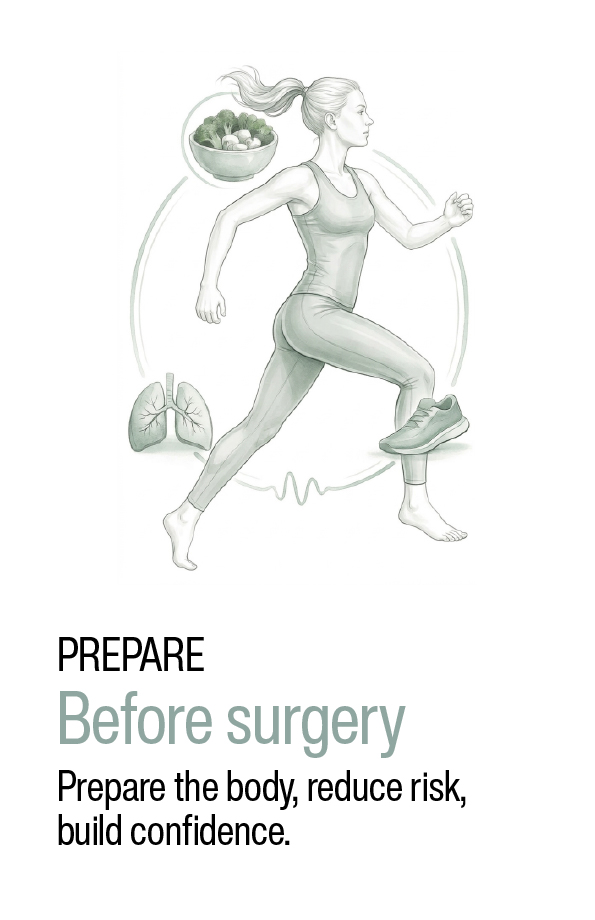
Recovery begins before surgery.

At Geneva Surgery, every procedure is part of a structured perioperative recovery system. The goal is not only to perform surgery with precision, but to reduce avoidable vulnerability, support safer recovery and guide the patient towards progressive return to function.
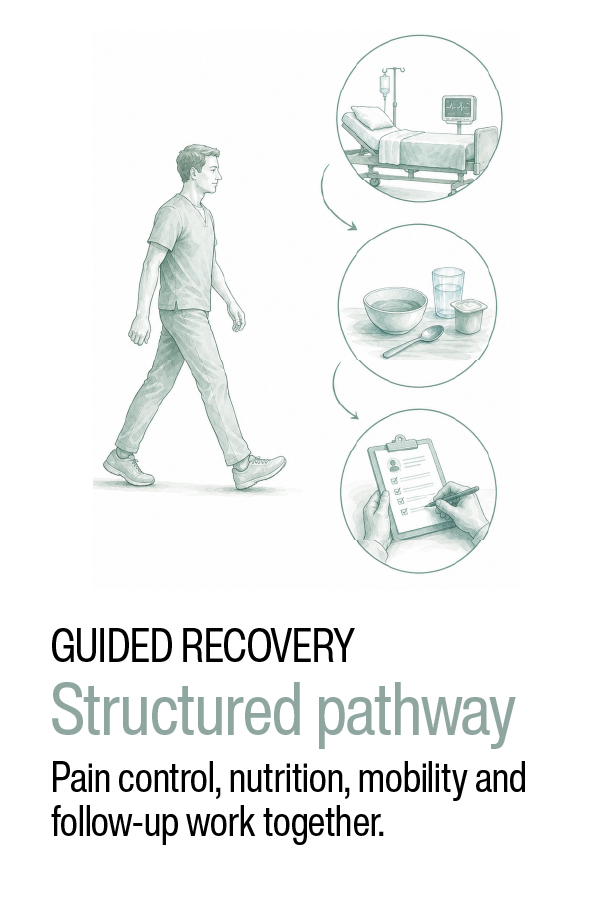
Preparation, robotic precision, pain control, early mobilization, oral intake, breathing, digestive activation and functional recovery belong to the same pathway.

Surgery is not an isolated event. What happens before, during and after the procedure directly influences how the patient recovers.

The Geneva Surgery Recovery System

The Geneva Surgery Recovery System organizes preparation, surgery and recovery within one clinical framework.
Not every patient needs the same level of preparation. A cholecystectomy, abdominal wall surgery and major colorectal surgery do not require the same intensity of support.
The philosophy remains the same: prepare what can be prepared, operate with precision, anticipate pain, encourage early mobilization and guide return to function.
The level of support depends on three elements :

  • the expected impact of the procedure;
  • the patient’s condition;
  • the level of preparation required.

One system. Three levels of perioperative support.

ERAS Principles

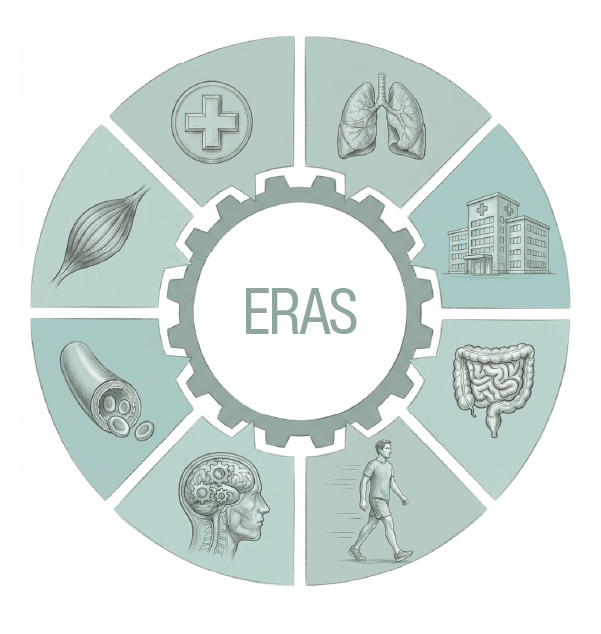
ERAS principles form the foundation of modern perioperative care. They aim to reduce surgical stress, promote early mobilization, support early oral intake, limit opioid use whenever possible and make the patient an active participant in recovery.

Core Health Pathway

The Core Health Pathway provides a scalable functional layer for planned abdominal procedures that do not require an advanced program, but still benefit from clear, simple and structured guidance.

Advanced Preparation & Recovery Program

The Advanced Preparation & Recovery Program is designed for major surgery, complex situations or higher-risk patients when more structured optimization is required.

Surgery restores anatomy.
Recovery restores function.

Why structured recovery matters

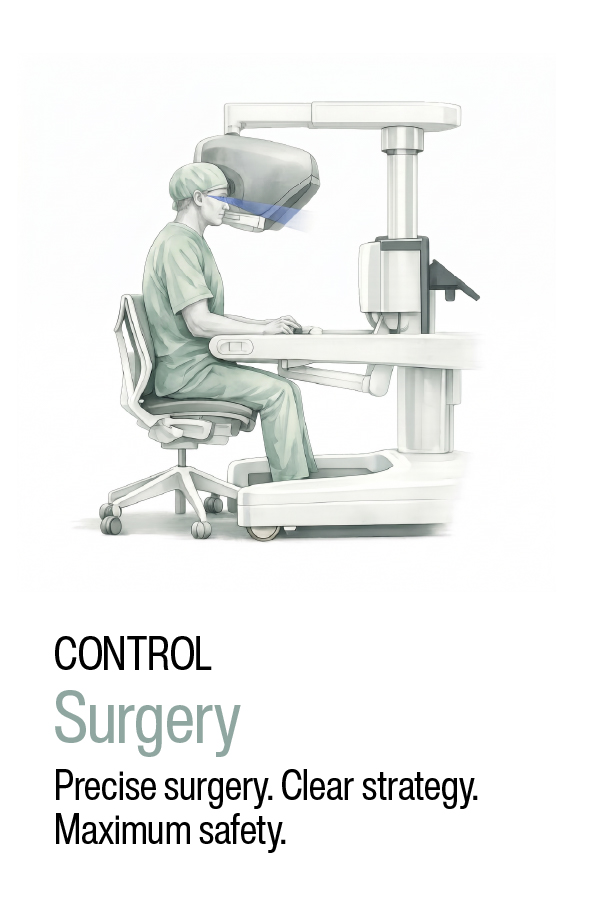
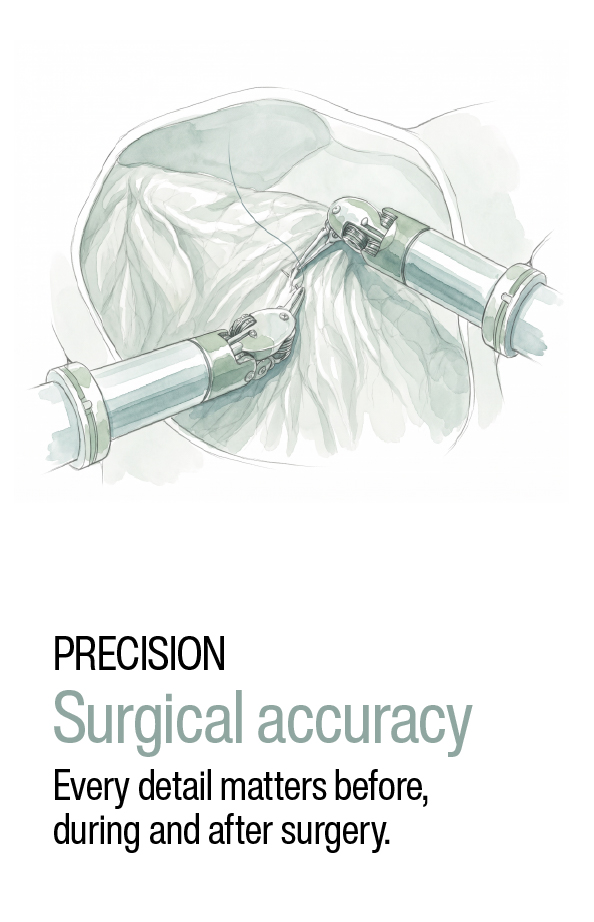
Robotic surgery reduces access trauma and supports recovery. It does not remove the physiological stress of surgery, nor the vulnerability linked to the patient’s condition.
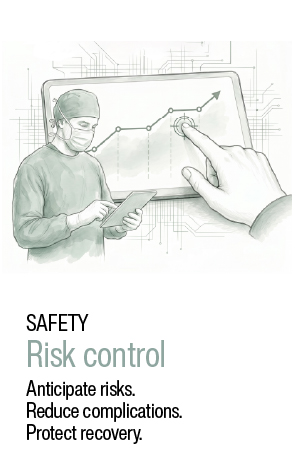
Pain, immobility, fatigue, respiratory limitation, slow digestive recovery or poor functional reserve can delay recovery when they are not anticipated.
ERAS has shown that safer recovery rarely depends on one single measure. It depends on the alignment of multiple details: preparation, surgical precision, pain control, early mobilization, oral intake, breathing and progressive return to function.

At Geneva Surgery, this logic is adapted to the level of support required.

  • Core Health: for patients who benefit from guided preparation and recovery, without requiring advanced prehabilitation.
  • Advanced Program: for major surgery, complex situations or higher-risk patients.


The goal is not to add complexity.

The goal is to reduce avoidable vulnerability.

Core Health Pathway

The Core Health Pathway is particularly useful in abdominal wall and hernia surgery. It may also support selected planned abdominal and digestive procedures, including cholecystectomy, anti-reflux surgery, hiatal hernia surgery and selected digestive operations.
It is not a fitness program. 
It is not generic physiotherapy.
It is a surgeon-led framework built around simple references :

  • breathing;
  • mobilizing;
  • walking;
  • controlling abdominal effort;
  • progressively returning to activity.

Advanced Preparation & Recovery Program

Some situations require more structured preparation: major surgery, frailty, limited functional reserve, nutritional risk, respiratory risk or metabolic vulnerability.

The advanced program may include :

  • functional conditioning;
  • respiratory preparation;
  • nutritional support or immunonutrition;
  • metabolic stabilization;
  • enhanced perioperative coordination.


The goal is not performance.

The goal is readiness.

What this means for patients

You know what to expect

Preparation and recovery are explained before surgery, making the pathway clearer and less uncertain.

You receive tailored guidance

The pathway depends on the procedure, your medical condition and the level of preparation required.

Recovery is not left to chance

Several perioperative factors are aligned to support safer and smoother recovery.

Pain control is anticipated

The pain strategy is designed to support comfort, mobility, oral intake and digestive recovery.

You remain active from the beginning

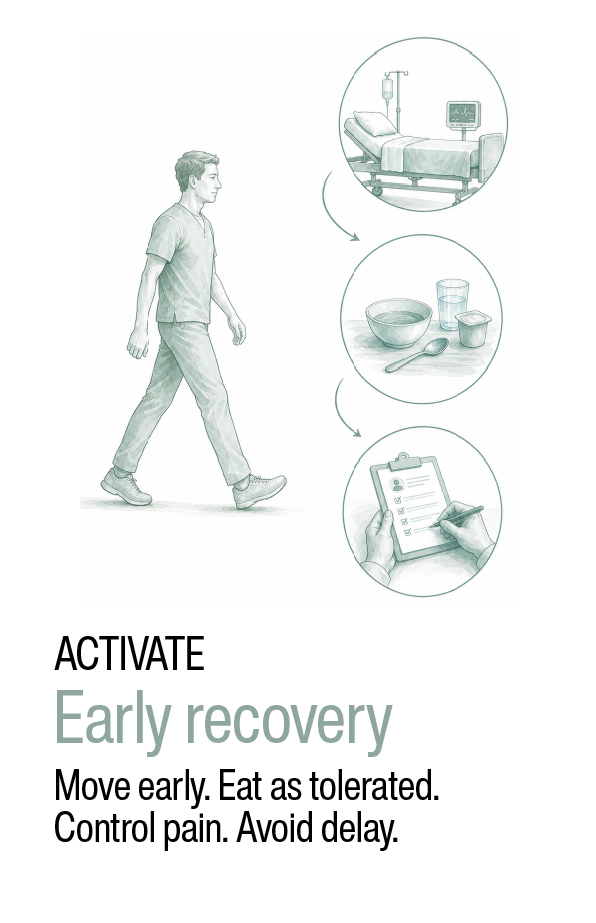
Walking, breathing and everyday movement are part of recovery from the earliest phase.

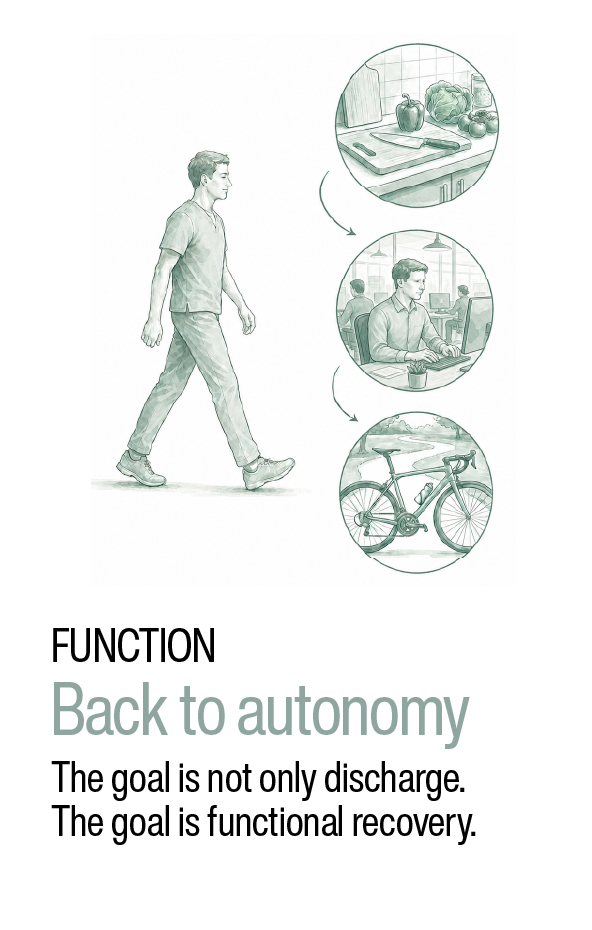
You progressively return to function

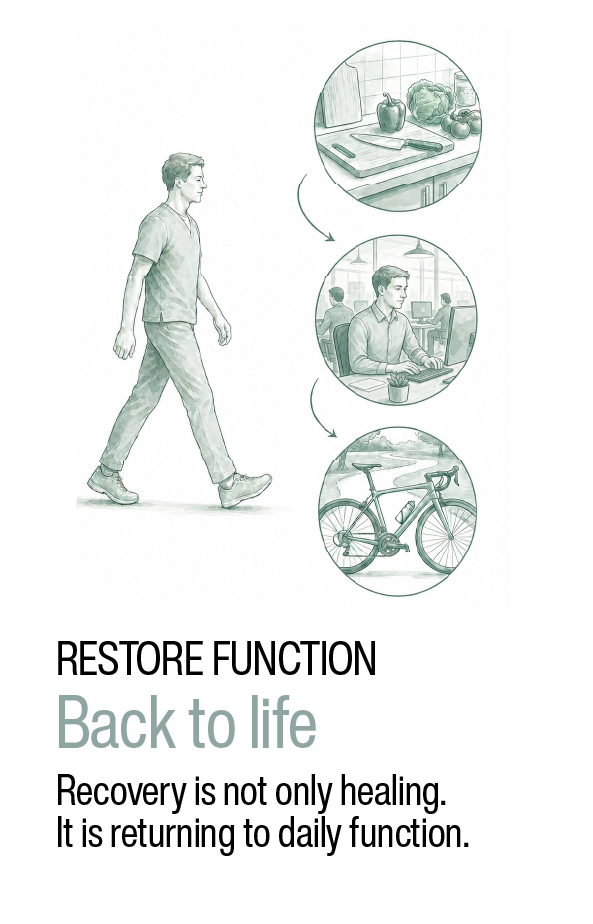
The goal is not only to recover from the procedure, but to progressively return to normal life.

From preparation to functional return

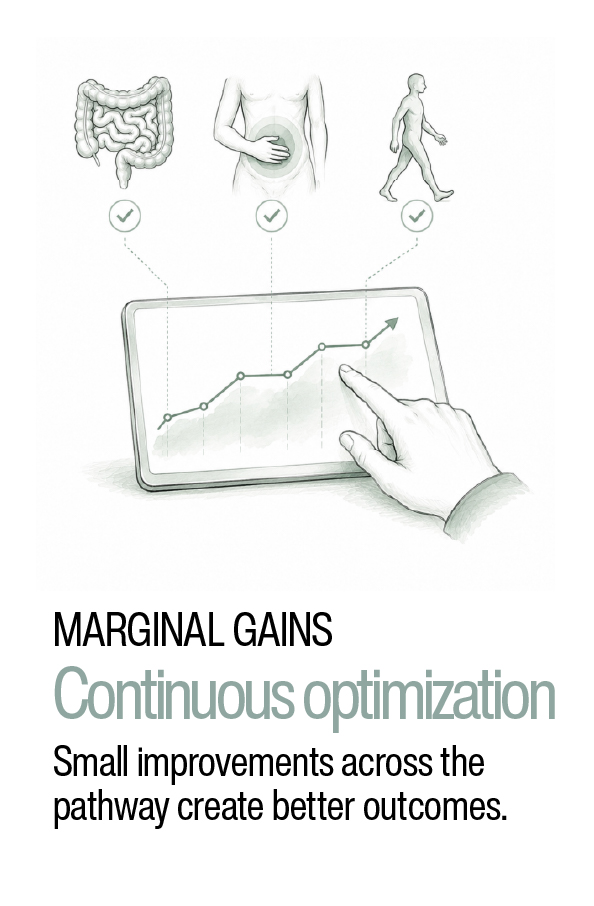
Recovery follows a continuum. Timing and intensity are adapted to each patient, but the structure remains consistent: preparation when indicated, robotic precision, pain control, early mobilization, oral intake according to tolerance, respiratory activation, digestive stimulation and progressive return to activity.

When surgery is scheduled

When surgery is planned, the appropriate pathway is defined according to the procedure, the patient’s condition and the level of complexity.
The patient may receive preparation documents, recovery guides and, when relevant, movement references adapted to the procedure.

The right level of guidance.
No unnecessary burden.

Applied across abdominal and digestive surgery

Preparation, precision and recovery belong together.

At Geneva Surgery, surgical care is organized as a coherent continuum: indication, preparation, procedure, early mobilization, recovery and functional return.
Each step is aligned to support safer, clearer and more confident recovery.

Recovery begins before surgery.