Digestive Oncological Surgery

Digestive oncological surgery within a coordinated pathway

Digestive oncological surgery requires more than tumour removal. It requires a coordinated pathway: multidisciplinary decision-making, precise surgical execution, complication avoidance and structured recovery.
At Geneva Surgery, selected digestive oncological procedures are planned within a tumour board framework and performed with minimally invasive robotic techniques whenever they provide a clear benefit. The objective is to deliver oncologic precision while preserving function and supporting a safe transition through the surgical phase of care.

Oncologic pathway continuity

Digestive oncological surgery is not an isolated event. It is one step within a broader treatment strategy.
Each case is assessed within a multidisciplinary framework, prepared before surgery, treated according to strict oncologic principles and supported by a structured recovery pathway. The goal is to reduce preventable disruption and maintain continuity throughout the patient’s oncologic journey.

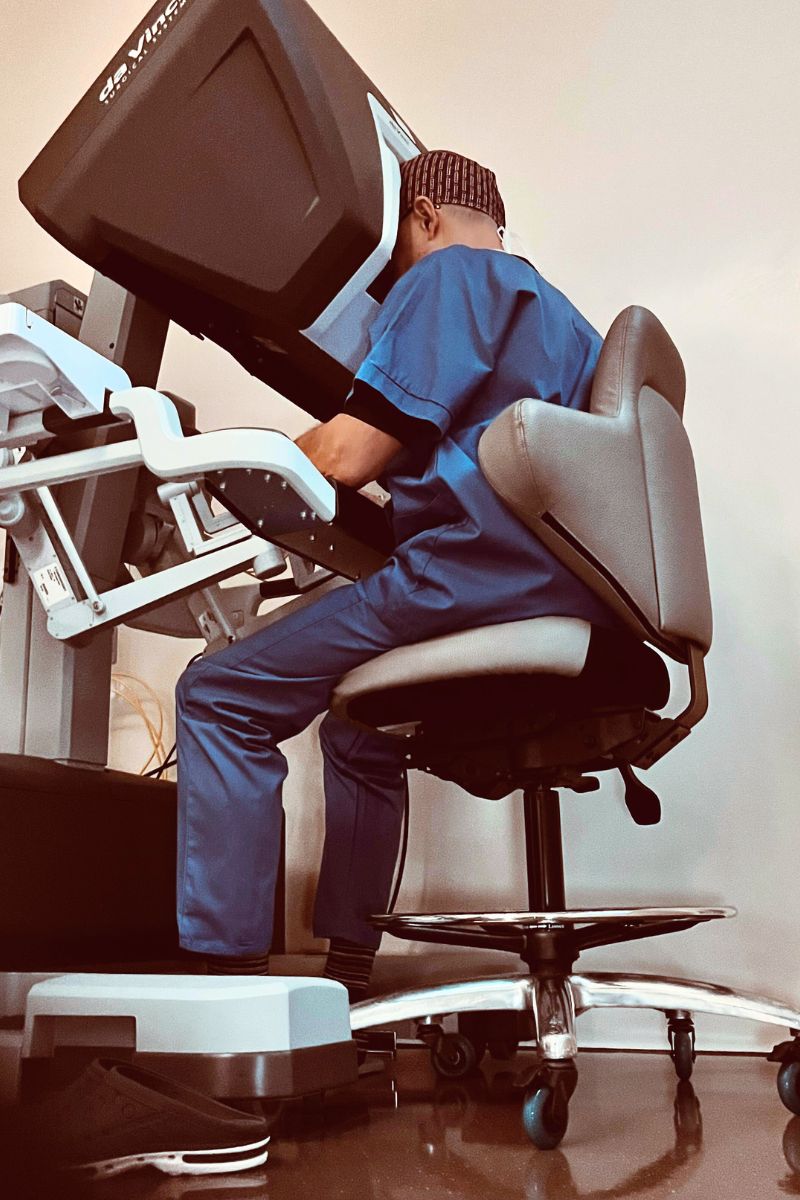
Dr Inan seated at the robotic console, operating the surgical system during a minimally invasive procedure.

Scope of Practice

Geneva Surgery treats selected digestive oncological conditions for which advanced minimally invasive and robotic surgery can provide a meaningful surgical advantage.
This includes colorectal cancer, selected small bowel tumours, selected gastric cancers excluding tumours of the oesophagogastric junction, gastrointestinal stromal tumours, neuroendocrine neoplasms and selected rare tumorous conditions of the abdominal wall, including desmoid tumours.
Tumours of the oesophagus, liver and pancreas are referred to specialised university centres when this provides the most appropriate expertise for the disease, anatomy and treatment strategy.

Multidisciplinary Decision-Making

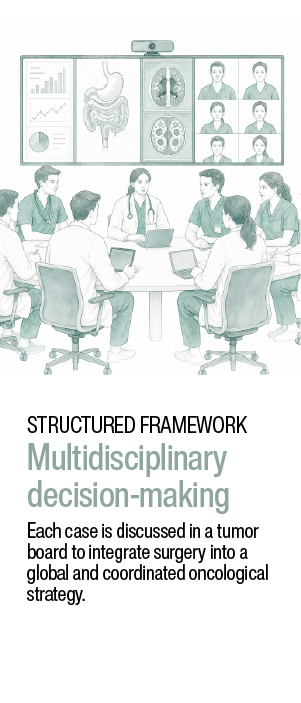
Surgical indications are defined within a multidisciplinary framework. Tumour board discussions integrate surgical, oncological, gastroenterological, radiological, pathological and, when required, genetic or nuclear medicine expertise.
This process ensures that surgery is positioned at the right moment, with the right objective, and in coherence with the complete oncological strategy.

Robotic oncologic surgery

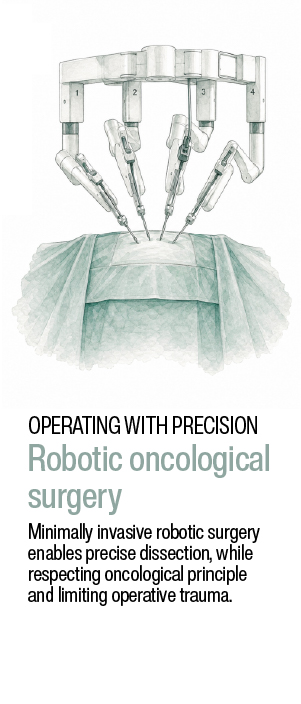
Robotic surgery supports precise dissection, controlled lymphatic clearance and stable reconstruction in anatomically demanding regions.
In digestive oncology, the value of robotics is not technology for its own sake. It lies in controlled execution: accurate planes, appropriate margins, lymph node clearance when indicated, reduced surgical trauma and preservation of function whenever possible.

FREQUENTLY ASKED QUESTIONS

Digestive Oncological Surgery

Digestive oncological surgery treats tumours of the digestive tract using oncologic principles such as appropriate margins, lymphatic clearance when indicated and integration into a coordinated treatment plan.

Selected colorectal cancers, small bowel tumours, selected gastric cancers, gastrointestinal stromal tumours, neuroendocrine neoplasms and selected rare abdominal wall tumours such as desmoid tumours.

No. Tumours of the oesophagus, liver and pancreas are referred to specialised university centres when this provides the most appropriate expertise and treatment environment.

The indication is discussed within a multidisciplinary tumour board framework, taking into account tumour type, staging, anatomy, patient condition and the overall treatment strategy.

Robotic surgery supports precise dissection, stable visualisation, lymphatic clearance when indicated and controlled reconstruction in complex anatomical regions.
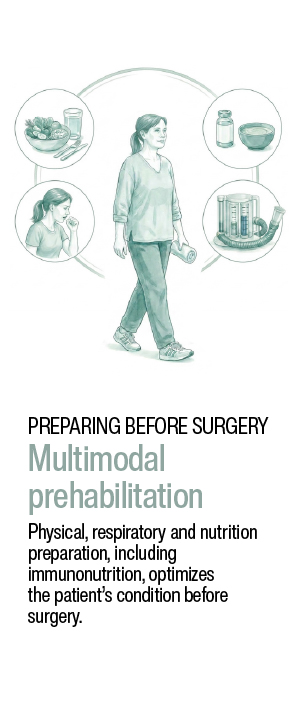
Prehabilitation prepares the patient through nutritional optimisation, immunonutrition, respiratory exercises, physical conditioning and medical balancing before surgery.
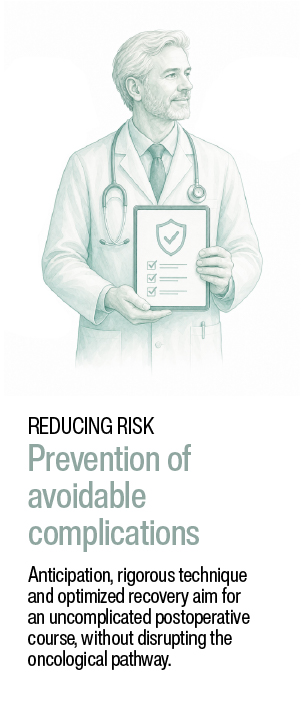
Preventable complications can delay recovery and disrupt the oncological pathway. Avoiding them is therefore part of the treatment strategy, not only a postoperative objective.
Complication avoidance

In oncological surgery, avoiding preventable complications is part of the treatment strategy.
A smooth postoperative course supports recovery and helps preserve continuity with further oncological planning when required. Surgical precision, structured perioperative care and early mobilisation all contribute to this objective.

Prehabilitation and perioperative optimisation

Preparation begins before the operation. The perioperative pathway integrates nutritional optimisation, immunonutrition, respiratory preparation, physical conditioning and medical balancing according to the patient’s condition and planned procedure.
This preparation follows ERAS-aligned principles and aims to improve surgical tolerance, reduce preventable risk and support a more predictable recovery.

Recovery after oncologic surgery

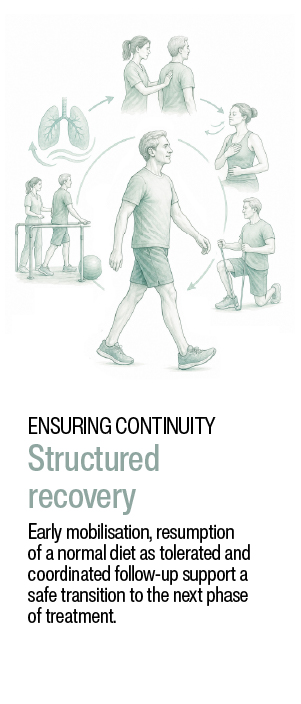
Recovery is active and criteria-based. It combines early mobilisation, respiratory exercises, digestive recovery, opioid-sparing pain control, nutritional support and close clinical monitoring.
Discharge is guided by clinical recovery criteria rather than by a fixed number of days. The objective is a safe transition out of hospital with the patient prepared for the next step of care.

Digestive Oncological Surgery

Educational Resources

Selected digestive oncological surgery procedures are illustrated through surgical educational videos on the Geneva Surgery YouTube channel. These resources are intended for professional education and complement clinical information, but do not replace in-person consultation or individual clinical evaluation.

Visit the Geneva Surgery YouTube channel for surgical educational videos related to digestive oncological surgery.