
FR - EN

Ventral Hernia

Definition and Functional Impact of Ventral Hernia

Ventral hernias are defects of the anterior abdominal wall through which abdominal contents protrude, often presenting as a visible bulge associated with discomfort, pressure or functional limitation. This group includes midline hernias such as umbilical and epigastric hernias, as well as other primary defects of the abdominal wall.

Functional impact and evolution

Symptoms vary widely. Some patients experience minimal discomfort, while others report pain, functional limitation or progressive enlargement of the hernia, particularly during physical activity or changes in posture. When ventral hernias interfere with daily activities, they can reduce overall quality of life and create anxiety. Over time, defects may enlarge and become more complex, increasing the difficulty of reconstruction.

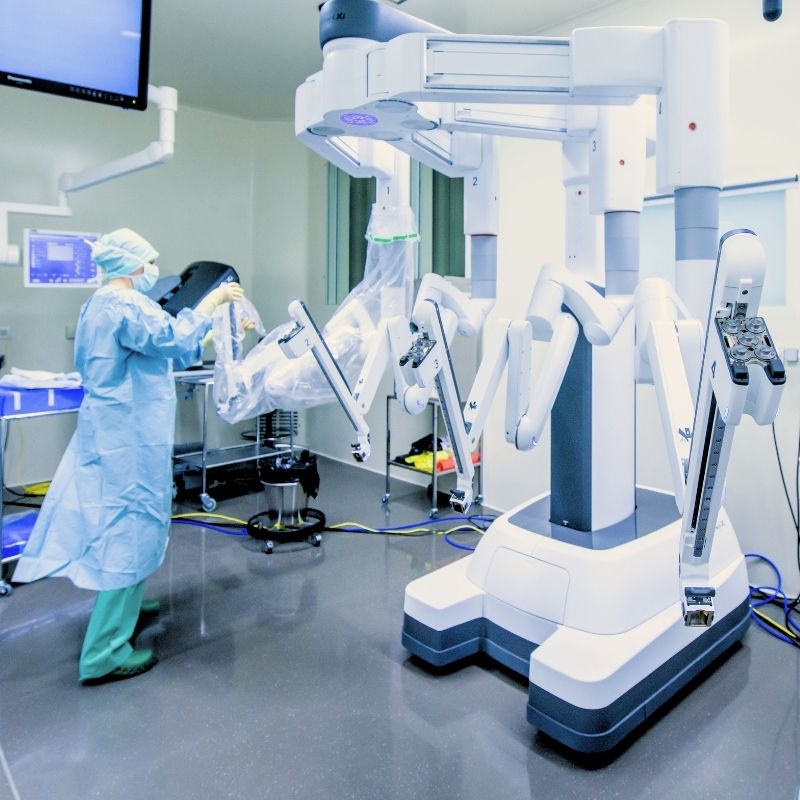
Nurse preparing the robotic surgical system in the operating room before minimally invasive ventral hernia repair.

Geneva Surgery approach

At Geneva Surgery, ventral hernias are approached with a comprehensive understanding of abdominal wall anatomy and function, integrating anatomical reconstruction with restoration of core stability.

Clinical Assessment and Indications

Clinical evaluation

Evaluation is based on detailed clinical assessment, including medical history, physical examination and analysis of functional impact. The size of the defect, tissue quality, symptom evolution and patient-specific factors are carefully considered.

Role of imaging

Imaging studies are used selectively when clinical examination alone does not provide sufficient information to define defect characteristics or anatomical relationships. This assessment supports precise surgical planning and appropriate timing of intervention.

Indications for surgery

Surgical repair is generally recommended when ventral hernias are symptomatic, progressively enlarging or associated with functional impairment. Lifestyle factors, physical demands, travel patterns and overall health status are integrated into shared decision-making, with the objective of restoring function under optimal conditions.

Surgical Strategy and Abdominal Wall Reconstruction

Reconstructive principles

Ventral hernia repair at Geneva Surgery is guided by core principles reflecting a modern and functional understanding of abdominal wall reconstruction. The objective is not merely to close a defect, but to restore normal abdominal wall anatomy in a durable and physiologically coherent manner.

Extraperitoneal prosthetic reinforcement

A central element of this strategy is the systematic use of extraperitoneal prosthetic reinforcement. By avoiding placement of foreign material in direct contact with intra-abdominal organs, this approach reduces the risk of adhesions and long-term complications. Reinforcement is integrated into anatomical planes that support tissue incorporation and long-term stability.

Functional stabilisation without aggressive fixation

Extraperitoneal positioning allows stabilisation of the prosthesis through anatomical reconstruction and tissue integration rather than extensive invasive fixation. This limits tissue trauma, reduces postoperative discomfort and supports durable functional outcomes while avoiding unnecessary fixation devices.

Role of robotic surgery

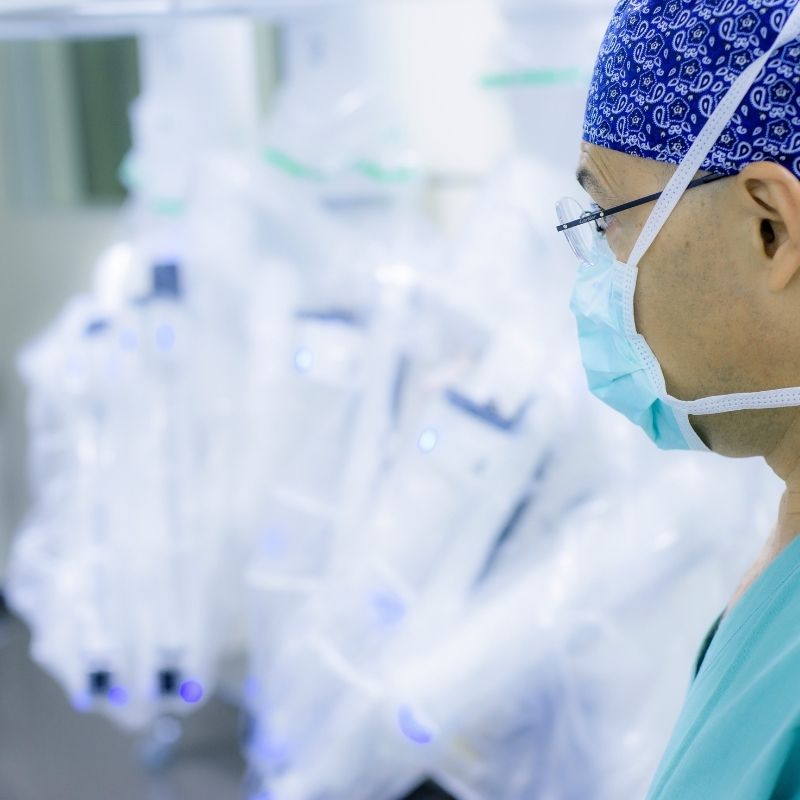
Surgical trauma is minimised through precise dissection and controlled reconstruction, supported by robotic surgery. The value of the robotic platform increases exponentially with the complexity of the pathology and reconstructive requirements, allowing accurate execution and predictable results.

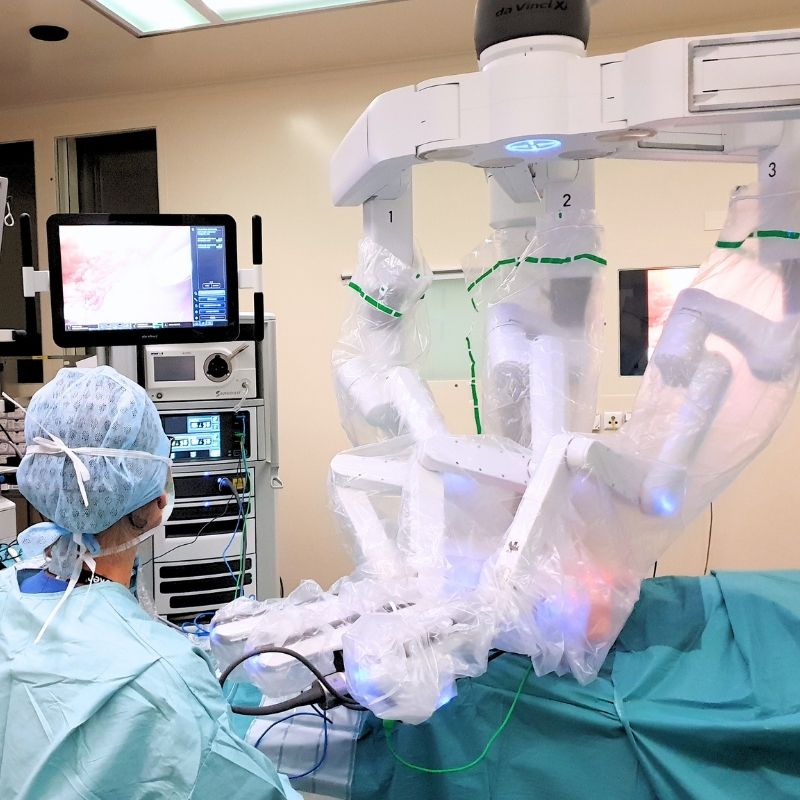
Robotic surgical system and operative monitors in the operating room during minimally invasive ventral hernia repair, supporting precise dissection and controlled reconstruction.

Advanced Reconstructive Adaptation

Adjunctive techniques

In selected ventral hernias, additional strategies may be required to facilitate tension-free reconstruction while preserving abdominal wall dynamics. These may include targeted muscle relaxation using botulinum toxin injections or controlled compartment release techniques such as Transversus Abdominis Release.

Integration with robotic surgery

These approaches are integrated selectively, based on anatomical and functional requirements, and are always performed in combination with robotic surgery to ensure precision, control and minimisation of surgical trauma.

GENEVA SURGERY

GENEVA SURGERY

VENTRAL HERNIA REPAIR

VENTRAL HERNIA REPAIR

The following answers address the most common questions about ventral hernia, including definition, symptoms, indications for surgery, reconstructive principles and recovery.

The following answers address the most common questions about ventral hernia, including definition, symptoms, indications for surgery, reconstructive principles and recovery.

A ventral hernia refers to a defect of the anterior abdominal wall through which abdominal contents can protrude. It may occur spontaneously or develop progressively over time and can affect both abdominal wall integrity and core function. Presentation and symptoms vary according to size, location and functional impact. Ventral hernias are commonly named based on their anatomical location, such as umbilical, epigastric, linea alba or Spigelian hernias.

Ventral hernias may present as a visible bulge, a feeling of pressure or discomfort, or functional limitation during daily activities. Symptoms often evolve gradually and may fluctuate with posture or physical effort. Beyond local discomfort, ventral hernias can impair abdominal wall mechanics and core stability.

Not necessarily. The indication for surgery depends on symptoms, functional impact and individual risk profile. Some ventral hernias can be monitored safely, while others benefit from reconstruction to restore abdominal wall function and prevent progression. The decision is approached as a risk management process based on objective assessment and patient-specific factors.

Ventral hernia repair follows modern reconstructive principles using a minimally invasive approach. The objectives are full anatomical restoration of the abdominal wall, wide extraperitoneal reinforcement for durable results, avoidance of invasive fixation, minimal surgical trauma and a prompt return to normal life. Functional restoration of the abdominal wall is prioritised over purely anatomical correction.

Robotic surgery allows precise dissection, controlled reconstruction and accurate placement of large extraperitoneal reinforcement within well-defined anatomical planes. The value of the robotic platform increases with the complexity of the hernia, particularly in large defects, recurrent cases or situations with altered anatomy. This approach supports durable repair while minimising tissue trauma and conversion to open surgery.

Extraperitoneal prosthetic reinforcement is used as a standard strategy to provide long-term stability. The choice of prosthetic material is tailored to the individual situation and discussed preoperatively. Placement within anatomical planes allows the abdominal wall to recover its biomechanical behaviour while avoiding the drawbacks associated with intraperitoneal mesh positioning.

Recovery is structured and individualised. Pain management follows an opioid-free strategy, early mobilisation is encouraged and functional recovery is guided progressively. Patients remain hospitalised until predefined recovery criteria are achieved, ensuring a safe and predictable return to daily life.

Recurrence risk depends on multiple factors, including hernia size, tissue quality, prior repairs and the reconstructive strategy used. All known and appropriate measures are combined to minimise this risk, based on anatomical restoration, wide extraperitoneal reinforcement and precise execution. Individual risk is discussed as part of the preoperative assessment.


Perioperative Care and Recovery

Structured perioperative pathway

Patients follow a structured perioperative pathway applied consistently across all surgical domains at Geneva Surgery. Preparation, surgery and recovery are coordinated to ensure a surgical journey that is safe, coherent and patient-centred.

Pain management

Pain management follows a proactive opioid-free strategy, with systemic opioids reserved exclusively for rescue situations. Avoiding routine opioid use supports early mobilisation, gastrointestinal recovery and overall postoperative comfort.

Clinic corridor for early mobilisation after surgery
Graduated compression bandage applied to the legs to support circulation and reduce the risk of thrombosis after abdominal surgery.

Thrombosis prevention

Thrombosis prophylaxis is addressed through a comprehensive strategy combining early and continued mobilisation, systematic use of graded elastic compression stockings, intermittent pneumatic compression boots applied during surgery on the operating table, and prophylactic anticoagulation.

Wound management

Skin closure is performed using intradermal resorbable sutures combined with surgical adhesive, allowing patients to shower or bathe without restriction and eliminating the need for wound care or suture removal.

Discharge criteria

Hospital stay continues until predefined recovery criteria are achieved, including effective pain control without routine opioid use, independent ambulation including stairs, adequate oral intake and evidence of return of bowel function. This structured framework supports safe discharge and predictable recovery.

Expected Outcomes

Functional results

Ventral hernia repair aims to restore abdominal wall integrity, improve function and provide durable reconstruction. Most patients experience improved comfort, enhanced stability and a progressive return to normal activities.

VENTRAL HERNIA REPAIR GENEVA

Educational Resources

Selected ventral hernia repair procedures are illustrated through professional surgical educational videos on the Geneva Surgery YouTube channel. These videos are intended exclusively for surgical education and professional training and do not replace in-person consultation or individual clinical evaluation.